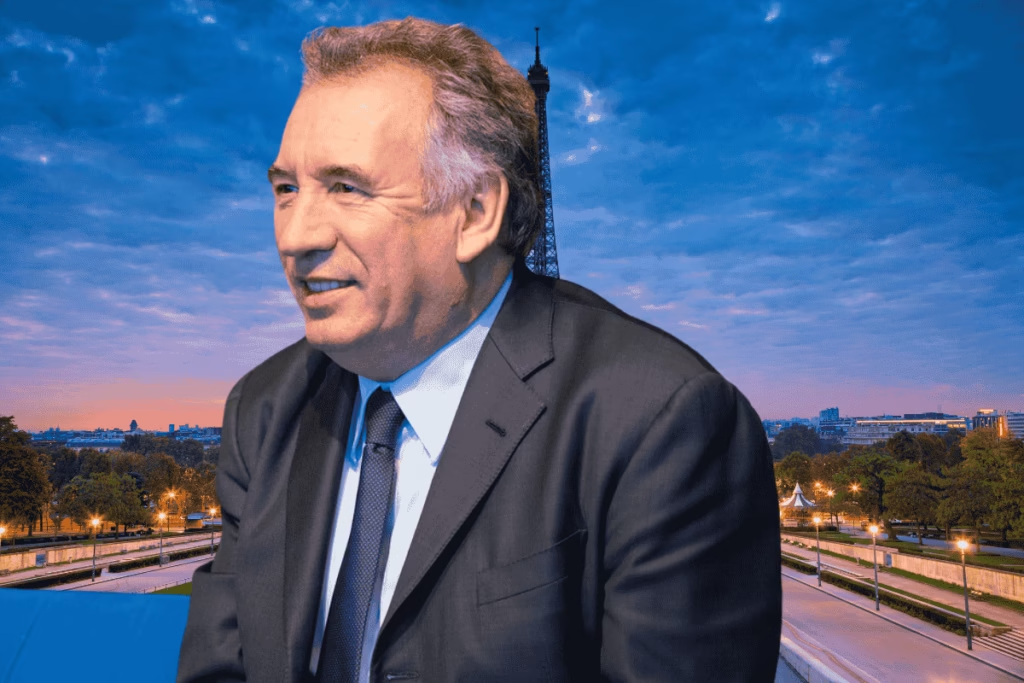
In December 2024, Emmanuel Macron, the President of France, appointed François Bayrou as the new Prime Minister of France. This decision followed weeks of political uncertainty and came after the dissolution of the French National Assembly in June 2024. With Bayrou’s appointment, the country hopes to find a leader capable of stabilizing the government and addressing its growing challenges.
Who is François Bayrou?
François Bayrou is no stranger to French politics. He is a veteran centrist and a long-time ally of President Macron. Bayrou has served in various high-profile roles, including as Mayor of Pau and as a minister in previous governments. Over the years, he has been a strong advocate for the center-right, and his political ideology often positions him between the left and right wings. Bayrou’s goal is to bridge the divide and create a more cooperative political environment in France.
At 73 years old, Bayrou is one of the oldest political figures to be appointed to the role of Prime Minister. His extensive experience, both locally and nationally, makes him well-equipped to take on the immense responsibilities that come with this position. His leadership will be tested as he faces the complex issues of a fractured political system and a country dealing with severe economic challenges.
The Political Landscape: Challenges for Bayrou
Bayrou’s appointment is a response to France’s political crisis. The country is grappling with a divided government following the dissolution of the National Assembly. In the wake of the June 2024 elections, no single party holds a majority. Instead, the National Assembly is now split into three major blocks: left-wing parties, centrist groups, and the far-right National Rally.
This fractured political environment presents Bayrou with a serious challenge. He must find a way to bring together these competing factions in order to form a stable government. The left-wing opposition has already expressed their resistance to Bayrou’s leadership, making it even harder for him to secure political unity.
Economic Pressures
Beyond the political hurdles, Bayrou faces a serious economic crisis. France has been dealing with high debt levels, budget deficits, and inflation. The country’s economic situation has worsened, and public dissatisfaction is rising. Many people feel the government is not doing enough to tackle the pressing issues.
In particular, the French farmers have voiced frustration with government policies, and social unrest has been growing. Bayrou will need to navigate these challenges while trying to maintain order and prevent further disruptions.
The budget for 2025 will be Bayrou’s first big test. The French government is facing a mounting budget deficit, and any misstep could send the country into further economic decline. Bayrou will have to make difficult decisions and push for reforms that balance the country’s fiscal health and the well-being of its citizens.
Will Bayrou Succeed?
The big question is whether François Bayrou can succeed in this difficult role. His appointment comes at a time when the French government is facing its most significant crisis in decades. In his new position, Bayrou will have to balance political negotiations, manage the economy, and keep public opinion in check.
Bayrou’s centrist approach could be a strength in these challenging times. He is seen as someone who is willing to compromise and work across party lines, which is crucial in such a polarized political landscape. However, the political divisions in the National Assembly are deep, and some groups may resist his attempts to form a coalition government.
In addition, Bayrou’s ability to manage the country’s debt crisis and reduce deficits without alienating the public will be key. France’s debt levels are unsustainable, and the new Prime Minister will have to make hard choices to address these economic problems. His approach to budget reform and public spending will be closely watched.
What’s Next for the French Government?
Bayrou’s primary focus will be the 2025 national budget. The French government needs to find ways to reduce its budget deficit and prevent further economic deterioration. At the same time, Bayrou must address social unrest, especially among workers and farmers who feel neglected by the current administration.
Bayrou has expressed a desire for “cooperation and dialogue” with all political factions, and his approach is seen as more conciliatory than that of his predecessors. His promise to avoid authoritarian measures, such as using the controversial Article 49.3 of the French Constitution (which allows laws to be passed without a vote), is aimed at ensuring greater political collaboration.
Public Reaction and Criticism
Bayrou’s appointment has already sparked mixed reactions. Some see him as the right leader to restore stability, while others question whether he can manage the pressures of the job. Opposition parties, especially the far-left and the far-right, have voiced their objections to his leadership. They argue that Bayrou may not have the power to unite a divided France and that his centrist position might not be enough to address the economic challenges ahead.
At the same time, Bayrou’s alliance with Macron is seen by some as an opportunity to continue the reforms initiated in Macron’s first term. However, his critics argue that Bayrou’s approach may be too cautious and lack the boldness required to tackle France’s urgent problems.
Challenges
François Bayrou’s appointment as Prime Minister represents both a hope for political stability and a challenge for the country. He faces a fractured political environment, a struggling economy, and rising public dissatisfaction. Yet, his centrist credentials and experience may allow him to navigate these challenges and bring about much-needed reforms.
As the new Prime Minister of France, Bayrou will have to carefully balance the needs of his country with the demands of its diverse political factions. His success or failure will likely shape the future of French politics for years to come.